
More Than Just Numbers: Why We're Grateful to Serve You

Let's be honest for a second, running a tax preparation business isn't always glamorous. There's a lot of paperwork, plenty of deadlines, and enough numbers to make your head spin. But here's the thing: none of that feels like "work" when you genuinely love what you do and who you do it for.
At Anchor Tax Service, we've built our business on one simple idea: Professional Service with a Personal Touch. And today, we wanted to take a step back from the tax tips and filing advice to do something a little different. We want to talk about you, our clients, and just how grateful we are that you've chosen to trust us with something as important as your financial well-being.
It's About More Than Just Taxes
Sure, we crunch numbers. We prepare returns. We make sure you're getting every deduction you deserve and staying on the right side of the IRS. That's the job description, right?
But if you've ever sat down with us, you know it goes way deeper than that.
When you walk through our doors (or give us a call), you're not just another file in a cabinet. You're a person with a story. Maybe you're a first-time filer who's nervous about doing things right. Maybe you're a small business owner juggling a million responsibilities and just need someone to take the tax stress off your plate. Maybe you've been with us for years, and at this point, we know your kids' names and ask about your vacation plans. Maybe you need us to just listen and pray with you because you’ve had a tough year.

That's the stuff that matters to us. The human side of what we do.
We've celebrated with clients when they got bigger refunds than expected. We've walked alongside others through tough financial seasons, helping them find a path forward. We've watched businesses grow from kitchen-table startups into thriving operations, and we've been honored to support them every step of the way.
These aren't just transactions to us. They're relationships. And we don't take that lightly.
What We Do (And Why We Love Doing It)
For those who might be new around here, let us give you a quick rundown of what Anchor Tax Service is all about.
Personal Tax Preparation
Whether your tax situation is straightforward or a little more complicated, we've got you covered. W-2s, 1099s, investment income, rental properties, life changes like marriage or having kids, we handle it all. Our goal is to make filing season as painless as possible while maximizing your return. No judgment, no confusing jargon, just clear answers and reliable service.
Business Tax Preparation
Small business owners, we see you. We know you're wearing about seventeen different hats on any given day, and "tax expert" probably isn't one you signed up for. That's where we come in. From sole proprietors to LLCs to S-Corps, we help businesses of all sizes navigate the tax landscape. We'll make sure you're compliant, organized, and taking advantage of every legitimate deduction available to you.

Individualized Bookkeeping Support
Here's a little secret: good bookkeeping throughout the year makes tax season so much easier. That's why we offer personalized bookkeeping support tailored to your specific needs. Whether you need help reconciling accounts, tracking expenses, or just getting your financial house in order, we're here to help. Think of it as building a solid foundation so that when April rolls around, we're not scrambling, we're ready.
Why "Personal Touch" Isn't Just a Slogan
You've probably seen plenty of businesses throw around phrases like "we care about our customers" or "you're like family to us." And honestly? Sometimes it feels a little hollow.
So let us tell you what "Professional Service with a Personal Touch" actually looks like in practice at Anchor Tax Service:
It means we answer the phone. When you call, you're going to talk to a real person who knows your name and your situation, not a robot or an automated menu that leads nowhere.
It means we take the time to explain things. Taxes can be confusing. We get it. That's why we don't rush through appointments or brush off your questions. If you want to understand why something is the way it is, we'll walk you through it until it makes sense.
It means we're proactive, not reactive. We're not just here to file your return once a year and disappear. We're thinking about your financial picture year-round, looking for opportunities to help you plan ahead and avoid surprises.
It means we treat your money like it's our money. Because in a way, your success is our success. When you thrive, we thrive. It's that simple.

The Heart of Our Gratitude
Here's where we get a little sappy, bear with us.
Every single client who trusts us with their taxes, their bookkeeping, or their business finances is making a choice. There are plenty of options out there. Big-name chains, online software, other local firms. You could go anywhere.
But you chose us.
And that means more than we can properly express in a blog post.
Your loyalty is genuinely the heartbeat of our business. It's what allows us to keep doing what we love. It's what motivates us to keep learning, keep improving, and keep showing up for you year after year.
We don't see our clients as account numbers or revenue streams. We see partners. We see neighbors. We see people who've placed their trust in us, and we wake up every day committed to earning that trust all over again.
A Thank You That Goes Beyond Words
We know that "thank you" can start to sound repetitive. But we mean it every single time.
Thank you for recommending us to your friends and family. Word-of-mouth referrals are the highest compliment we can receive, and we never take them for granted.
Thank you for your patience during busy season. (We know January - April can get a little hectic around here!)
Thank you for your feedback, the good and the constructive. It helps us grow and serve you better.
Thank you for the conversations, the laughs, the tears, the prayers, and the updates on your lives. You make our work meaningful.

We're Here When You Need Us
Whether you're gearing up for tax season, thinking about restructuring your business, or just have a quick question about a 1099 that showed up in your mailbox, we're always just a phone call away.
At Anchor Tax Service, you're never "bothering" us. Reaching out is exactly what we're here for.
So if there's anything we can help with, or if you just want to say hi: don't hesitate to get in touch. We'd love to hear from you.
Give us a call at 423-243-8015. We'll be here, ready to help with professional service and that personal touch you've come to expect.
From all of us at Anchor Tax Service: thank you. Truly. We're grateful for you, and we can't wait to continue serving you for many years to come.
Here's to your success: and to our ATS Family.
With gratitude,
The Anchor Tax Service Team
How to Prepare for Your First Appointment with Anchor Tax Service
![[HERO] How to Prepare for Your First Appointment with Anchor Tax Service](https://cdn.marblism.com/NhZ934ztx9S.webp)
So, you've decided to work with Anchor Tax Service for your taxes this year, awesome choice! Whether you're a first-time filer, switching from another preparer, or finally ditching the DIY approach, we're excited to meet you.
Now, here's the thing: a little preparation goes a long way. Walking into your appointment with everything organized doesn't just make our job easier, it makes your experience smoother, faster, and (most importantly) ensures you get every single deduction you deserve.
Think of it like going to the doctor. Sure, you could show up and wing it, but if you've got your medical history and a list of symptoms ready, the appointment is way more productive. Tax prep works the same way!
Let's walk through exactly what you need to bring so you can breeze through your first appointment like a pro.
Why Being Prepared Matters
Before we dive into the checklists, let's talk about why this matters so much.
You'll save time. When you come prepared, we can get straight to work instead of pausing to track down missing documents. That means less time in our office and more time doing the things you actually enjoy.
You'll save money. Seriously! When we have all your information upfront, we can spot every deduction and credit you qualify for. Missing documents often mean missed opportunities, and nobody wants to leave money on the table.
You'll reduce stress. There's nothing worse than that sinking feeling when you realize you forgot something important. Coming prepared means you can relax, knowing everything is handled.
You'll get faster results. Complete information means we can file your return quickly and accurately. That refund (if you're getting one) hits your bank account sooner rather than later.

The Individual Tax Preparation Checklist
If you're filing as an individual or family, here's your go-to checklist. Print it out, check things off as you gather them, and bring everything to your appointment.
Personal Identification
- Valid photo ID (driver's license, state ID, or passport) for you and your spouse if filing jointly
- Social Security cards for yourself, your spouse, and all dependents
- Date of birth for everyone on the return
- Bank account information (routing and account numbers) for direct deposit of your refund
Income Documents
This is the big one! We need to know about all the money that came your way during the tax year:
- W-2 forms from all employers
- 1099-NEC or 1099-MISC for freelance, gig work, or contract income
- 1099-INT for interest earned from bank accounts
- 1099-DIV for dividend income from investments
- 1099-B for stock sales or investment transactions
- 1099-G for unemployment compensation or state tax refunds
- 1099-R for retirement distributions (pensions, IRAs, 401k withdrawals)
- 1099-SSA for Social Security benefits
- Rental income records if you own rental property
- Gambling winnings (yes, really, W-2G forms)
Deductions and Credits
This is where the magic happens! These documents help us find every way to lower your tax bill:
- Mortgage interest statement (Form 1098) from your lender
- Property tax statements
- Charitable donation receipts (cash and non-cash contributions)
- Medical expense receipts (if they exceed a certain percentage of your income)
- Student loan interest statement (Form 1098-E)
- Tuition statements (Form 1098-T) for education credits
- Childcare expense records including the provider's name, address, and tax ID
- Records of estimated tax payments you made during the year
Helpful Extras
- Last year's tax return (especially if this is your first time with us, it helps us get the full picture)
- IRS letters or notices you've received
- Health insurance information (Form 1095-A, B, or C)

The Business Owner Tax Preparation Checklist
Running a business? You're going to need a few extra items. Don't worry, it's not as overwhelming as it looks. Just gather what you can, and we'll work through the rest together.
Business Basics
- Business name, address, and EIN (Employer Identification Number)
- Business structure documentation (LLC articles, S-Corp election, partnership agreement, etc.)
- Previous year's business tax return
Financial Statements and Records
- Profit and Loss (P&L) statement for the tax year
- Balance sheet (if available)
- Bank statements for all business accounts (12 months)
- Credit card statements for business purchases
- Loan statements for any business loans
- Vehicle mileage log if you use your car for business
Income Records
- Invoices or records of all income received
- 1099-K forms from payment processors (PayPal, Square, Stripe, etc.)
- 1099-NEC forms you received from clients
Expense Documentation
- Receipts for major purchases (equipment, supplies, inventory)
- Rent or lease payments for office or retail space
- Utility bills for your business location
- Insurance premium statements (business liability, professional insurance)
- Professional service fees (legal, accounting, consulting)
- Advertising and marketing expenses
- Employee payroll records and W-2s/1099s you issued
- Contractor payments and 1099s you issued to them
Home Office (If Applicable)
- Square footage of your home office
- Total square footage of your home
- Home expenses (mortgage interest, utilities, insurance) that can be partially allocated

Tips for Staying Organized
Okay, that's a lot of stuff. Here are some practical tips to make gathering everything easier:
Create a "tax folder" at the start of every year. Whether it's a physical folder in your filing cabinet or a digital folder on your computer, having one dedicated spot for tax documents is a game-changer. Every time something tax-related comes in the mail or your inbox, drop it in there.
Don't wait until the last minute. January rolls around, and those W-2s and 1099s start showing up. As they arrive, add them to your folder. By the time your appointment comes around, you'll have everything in one place.
Use the checklist as a guide, not a stress test. If you're missing something, don't panic. Bring what you have, and we'll figure out the rest together. We'd rather you come in with 90% of what you need than delay your appointment trying to track down every last receipt.
When in doubt, bring it. Not sure if a document is relevant? Bring it anyway! It's much easier for us to say "we don't need that" than for you to make a second trip.
What to Expect at Your First Appointment
Once you've gathered your documents and arrived at our office, here's what happens:
- We'll review everything together. We'll go through your documents, ask a few questions about your situation, and make sure we have the full picture.
- We'll look for opportunities. This is where our expertise comes in. We'll identify deductions and credits you might not even know exist.
- We'll answer your questions. Confused about something? Ask! There are no silly questions when it comes to your taxes.
- We'll prepare your return. Once we have everything, we'll get to work and have your return ready for your review.
- We'll file and celebrate. After you approve your return, we'll file it electronically, and you can breathe a sigh of relief knowing it's done right.
Ready to Get Started?
We can't wait to meet you and help you navigate tax season with confidence. A little preparation now means a smoother, faster, and more rewarding experience for both of us.
Have questions before your appointment? Need help figuring out what to bring? Don't hesitate to reach out: we're always happy to help.
Give us a call at 423-243-8015 to schedule your first appointment or ask any questions. Let's make this tax season your best one yet!
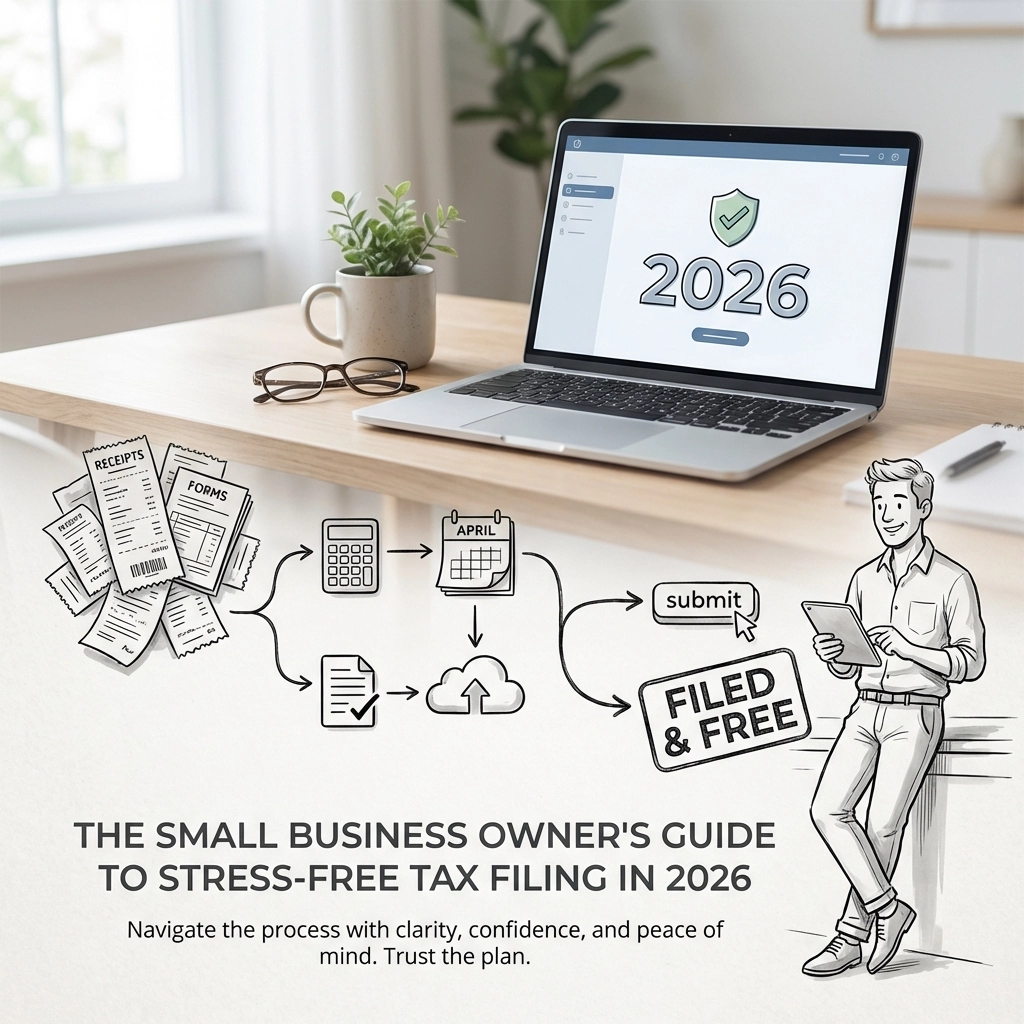
The Small Business Owner's Guide to Stress-Free Tax Filing in 2026
"Professional Service with a Personal Touch"
Let's be honest, when someone mentions "tax season," most small business owners feel their stomach drop. You know the feeling. That mix of dread, confusion, and the nagging thought that you're probably forgetting something important.
But here's the good news: tax filing in 2026 doesn't have to feel like a root canal. With a little preparation, the right knowledge, and maybe some help from people who actually enjoy this stuff (yes, we exist!), you can breeze through tax season and get back to what you do best, running your business.
So grab a cup of coffee, take a deep breath, and let's walk through everything you need to know for a stress-free filing season.
Why Tax Season Feels So Overwhelming
Before we dive into the solutions, let's acknowledge the elephant in the room. Tax season feels hard because, well, it kind of is. Between tracking income, organizing expenses, understanding which forms you need, and keeping up with ever-changing tax laws, it's a lot to handle on top of your regular business operations.
And if you're a small business owner wearing multiple hats, CEO, marketing department, customer service, and janitor all rolled into one, finding time to focus on taxes can feel impossible.
But here's the thing: most of that stress comes from disorganization and uncertainty. Once you have a clear plan and know your deadlines, everything becomes much more manageable.

Step One: Ditch the Shoebox Method
We've all been there. Receipts stuffed in drawers, invoices scattered across your desk, and that one important document you swore you put somewhere safe but now can't find to save your life.
The "shoebox method" of record-keeping might feel easier in the moment, but it creates a massive headache when tax time rolls around. This year, let's change that.
Get Organized Now (Not Later)
Here are some simple ways to get your financial house in order:
Create a dedicated system. Whether it's a filing cabinet, a labeled accordion folder, or a digital folder on your computer, pick one place where all tax-related documents live. Consistency is key.
Go digital when possible. Scan paper receipts and save them to the cloud. Apps like QuickBooks, FreshBooks, or even your phone's camera can make this painless. Digital records are easier to search, harder to lose, and take up zero physical space.
Separate business and personal expenses. If you're still using one bank account for everything, now's the time to open a dedicated business account. Trust us, your future self will thank you when you're not scrolling through months of transactions trying to figure out which coffee run was a client meeting.
Set a weekly money date. Spend 15-30 minutes each week categorizing expenses and updating your records. Small, consistent effort beats a frantic all-nighter in April every single time.
Know Your 2026 Tax Deadlines
Missing a tax deadline can mean penalties, interest, and a whole lot of unnecessary stress. Here are the key dates every small business owner needs to have on their calendar this year:

January 31, 2026
This is your deadline to provide W-2 forms to any employees and 1099-NEC or 1099-MISC forms to independent contractors you worked with in 2025. This one comes up fast, so don't let it sneak up on you!
March 16, 2026
If your business is structured as a partnership or S corporation (calendar year), your tax return is due. Need more time? File Form 7004 for an extension until September 15, 2026.
April 15, 2026
This is the big one for most people. Sole proprietors, single-member LLCs, C corporations, and individuals all have returns due on this date. It's also the deadline for making 2025 IRA contributions if you want to reduce your taxable income.
Quarterly Estimated Tax Payments
If you're self-employed or expect to owe $1,000 or more in taxes, you'll need to make quarterly estimated payments throughout the year:
- April 15, 2026 (Q1)
- June 15, 2026 (Q2)
- September 15, 2026 (Q3)
- January 15, 2027 (Q4)
Important note: If you file for an extension, that only extends your filing deadline, not your payment deadline. You'll still need to pay any estimated taxes on time to avoid penalties.
Deductions You Might Be Missing
Here's where things get exciting. Well, as exciting as taxes can get. Many small business owners leave money on the table simply because they don't know what they can deduct. Let's fix that.
Home Office Deduction
If you use part of your home exclusively and regularly for business, you may qualify for the home office deduction. This can include a portion of your rent or mortgage, utilities, internet, and even home repairs.
There are two methods to calculate this:
- Simplified method: $5 per square foot of your home office, up to 300 square feet ($1,500 max)
- Regular method: Calculate the actual percentage of your home used for business and apply it to your expenses
Either way, it's real money back in your pocket.

Software and Subscriptions
All those tools you use to run your business? They're likely deductible. This includes:
- Accounting software (QuickBooks, FreshBooks, Xero)
- Project management tools (Asana, Trello, Monday)
- Email marketing platforms (Mailchimp, Constant Contact)
- Design tools (Canva, Adobe Creative Suite)
- Website hosting and domain fees
- Cloud storage services
If it helps you run your business, keep track of it!
Other Commonly Overlooked Deductions
Don't forget about these potential write-offs:
- Business insurance premiums
- Professional development (courses, conferences, books related to your industry)
- Marketing and advertising costs
- Bank fees and credit card processing fees
- Business mileage (keep a log!)
- Office supplies and equipment
The key is documentation. Keep those receipts, track those expenses, and when in doubt, ask a professional.
When to Call in the Professionals
Look, we get it. You're capable, you're smart, and you've probably handled your own taxes before. But there's a difference between can do something and should do something.
Here are some signs it might be time to get some help:
- Your business has grown significantly this year
- You have employees or contractors to report
- You're unsure which deductions apply to you
- You've experienced a major life change (marriage, divorce, new baby, home purchase)
- You simply don't have the time or energy to deal with it
- The thought of taxes makes you want to hide under your desk

Let Anchor Tax Service Take the Stress Away
At Anchor Tax Service, we believe tax season should be a time of clarity: not chaos. We're here to support you through every step of the process, from organizing your documents to maximizing your deductions to filing on time.
Our approach is simple: professional service with a personal touch. We take the time to understand your unique situation, answer all of your questions, and make sure you feel confident about your taxes. Whether you're a sole proprietor just starting out or an established business with complex needs, we've got your back.
You didn't start your business to become a tax expert. You started it to pursue your passion, serve your customers, and build something meaningful. Let us handle the tax stuff so you can focus on what matters most.
Your 2026 Action Plan
Let's wrap this up with a simple checklist to keep you on track:
- Set up an organized system for receipts and documents
- Mark all key deadlines on your calendar
- Separate business and personal finances
- Track potential deductions throughout the year
- Schedule quarterly estimated tax payments
- Reach out to a tax professional for personalized guidance
Tax season doesn't have to be stressful. With a little preparation and the right support, you can file with confidence and maybe even get a nice refund while you're at it.
Ready to make 2026 your easiest tax year yet? We're here for you. Get in touch with Anchor Tax Service today, and let's make it happen together!
Call us at 423-243-8015.

Sole Proprietor, LLC, or S-Corp: Which Business Structure is Right for You?
"Professional Service with a Personal Touch"
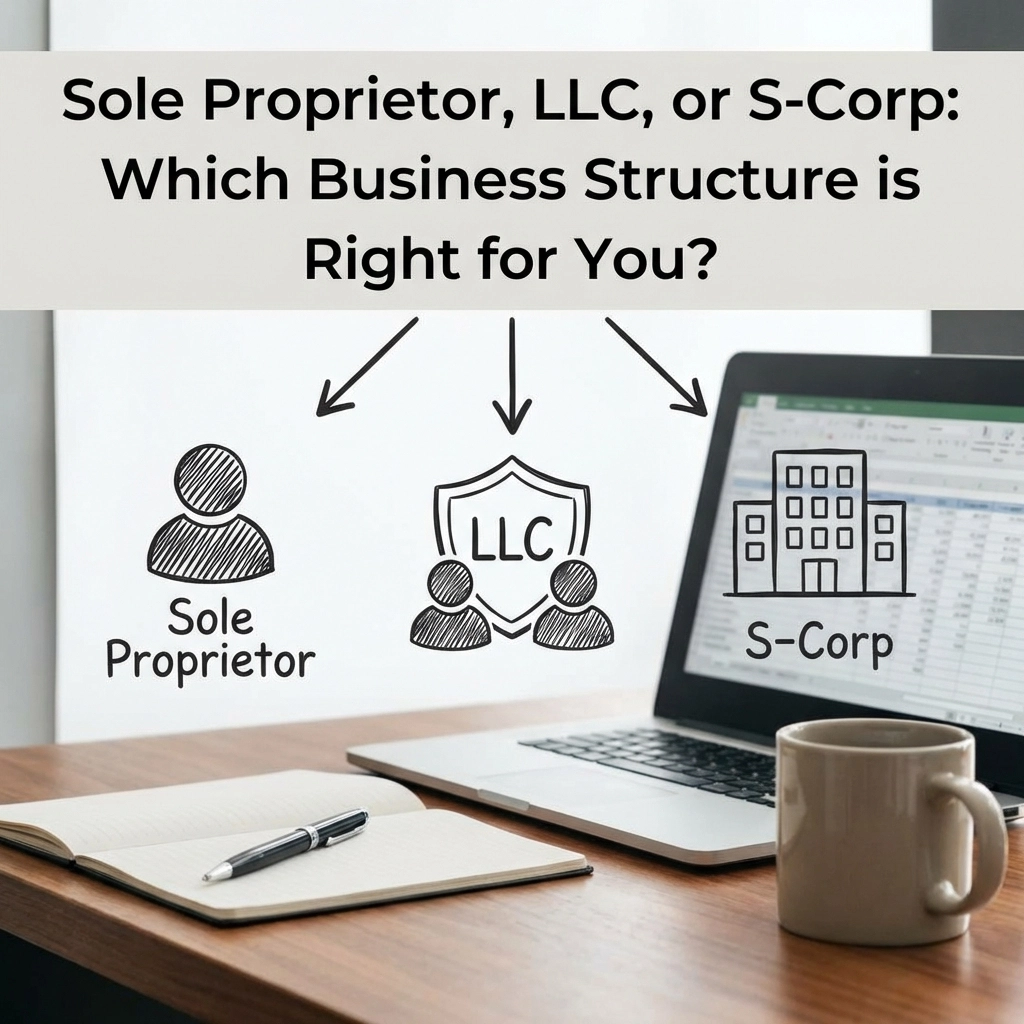
So you've got a business idea, or maybe you're already up and running, and now you're staring down one of the most common questions we hear: What's the difference between a sole proprietorship, an LLC, and an S-corp?
Don't worry. You're not alone in feeling a little confused. These terms get thrown around constantly, and honestly, they can sound like alphabet soup if nobody takes the time to break them down for you.
That's exactly what we're here to do.
At Anchor Tax Service, we help business owners like you navigate these decisions every single day. And here's the truth: there's no one-size-fits-all answer. The right structure for your business depends on your specific situation, your goals, your income, your tolerance for paperwork, and how much protection you want for your personal assets.
Let's walk through each option together so you can make an informed decision that sets your business up for success.
What Exactly Is a Sole Proprietorship?
A sole proprietorship is the simplest business structure out there. In fact, if you start doing business without formally registering as anything else, congratulations, you're automatically a sole proprietor.
There's no paperwork to file with your state (beyond any local business licenses you might need). There's no separate tax return for your business. Everything flows right through to your personal tax return on Schedule C.
The good stuff:
- It's free and easy to start
- Minimal paperwork and compliance requirements
- You have complete control over all business decisions
- Tax filing is straightforward
The not-so-good stuff:
- Zero liability protection, your personal assets (home, car, savings) are on the line if your business gets sued or can't pay its debts
- You pay self-employment tax on ALL your business profits
- It can be harder to bring in investors or get certain types of financing

Who's a Good Fit for a Sole Proprietorship?
If you're just dipping your toes into entrepreneurship, maybe freelancing on the side, selling crafts online, or offering consulting services, a sole proprietorship might be the perfect starting point. It's ideal for low-risk businesses where you're testing the waters before diving in completely.
Just keep in mind: as your business grows (and especially as your profits increase), you'll probably want to revisit this decision.
Let's Talk About LLCs
LLC stands for Limited Liability Company, and it's become incredibly popular for small business owners. Why? Because it gives you the best of both worlds: liability protection AND flexibility.
When you form an LLC, you're creating a separate legal entity for your business. That means there's a wall between your personal assets and your business obligations. If something goes wrong, a lawsuit, unpaid debts, an unexpected disaster, your personal savings, your house, and your car are generally protected.
The good stuff:
- Personal liability protection (this is huge!)
- Flexible tax options, you can be taxed as a sole proprietor, partnership, or even elect S-corp taxation
- Less paperwork and compliance requirements than a corporation
- No limit on the number of members (owners)
- Non-U.S. citizens can be members
The not-so-good stuff:
- There are setup costs and ongoing state fees (these vary by state)
- Some states charge annual franchise taxes or fees regardless of profit
- By default, you still pay self-employment tax on all profits

Who's a Good Fit for an LLC?
If you want that liability protection without drowning in corporate formalities, an LLC is often the sweet spot. It works great for small businesses with moderate risk, business owners who want flexibility in how they're taxed, and entrepreneurs who might want to bring in partners or investors down the road.
Breaking Down the S-Corp
Here's where things get a little more interesting. An S-corp isn't actually a business structure in the same way a sole proprietorship or LLC is. It's a tax election, a special status you can request from the IRS.
You can either form a corporation and elect S-corp status, or (here's the cool part) you can form an LLC and choose to be taxed as an S-corp. This gives you the liability protection and flexibility of an LLC with potential tax savings.
So what's the big tax advantage everyone talks about?
With a sole proprietorship or standard LLC, you pay self-employment tax (currently 15.3%) on all your business profits. With an S-corp, you pay yourself a "reasonable salary" and only that salary is subject to employment taxes. Any remaining profits can be taken as distributions, which aren't subject to self-employment tax.
Let's put some numbers to it. Say your business makes $100,000 in profit:
- As a sole proprietor: You'd pay self-employment tax on all $100,000
- As an S-corp: You might pay yourself a $60,000 salary (subject to employment tax) and take $40,000 as a distribution (not subject to self-employment tax)
That difference can add up to thousands of dollars in savings.
The good stuff:
- Potential for significant tax savings on self-employment taxes
- Personal liability protection
- Can add credibility with vendors and clients
The not-so-good stuff:
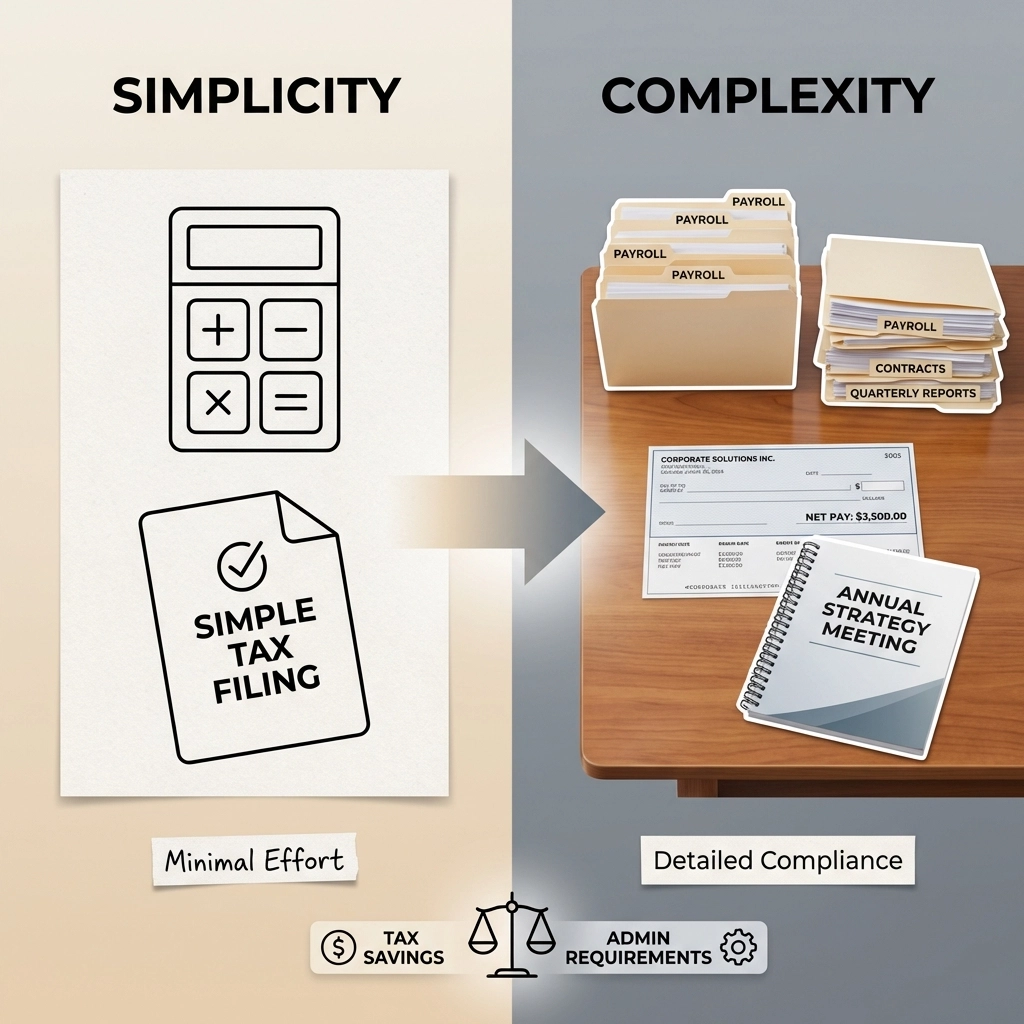
- More paperwork and compliance requirements
- Must pay yourself a "reasonable salary" (the IRS watches this closely)
- Requires separate payroll processing
- Maximum of 100 shareholders
- All shareholders must be U.S. citizens or residents
- Annual meetings and corporate minutes are required
Who's a Good Fit for an S-Corp?
S-corp taxation starts making sense when your business is consistently profitable, generally when you're earning somewhere above $40,000-$50,000 in net profit annually. The tax savings need to outweigh the additional costs of payroll processing and compliance.
If your business income fluctuates wildly or you're still in the early growth stages, the extra hassle might not be worth it yet.
Quick Comparison: Which One Wins?
The Bottom Line
Choosing between a sole proprietorship, LLC, and S-corp isn't about picking the "best" option: it's about picking the right option for where you are right now and where you're headed.
Starting small with minimal risk? A sole proprietorship keeps things simple.
Want liability protection without too much red tape? An LLC gives you that protective wall.
Making solid profits and ready to optimize your taxes? An S-corp election could save you real money.
And here's the thing: your business structure isn't set in stone. Many of our clients start as sole proprietors, form an LLC as they grow, and eventually elect S-corp taxation when it makes financial sense. Your business evolves, and your structure can evolve with it.
We're Here to Help You Figure It Out
At Anchor Tax Service, we believe in professional service with a personal touch. We know that behind every business structure question is a real person trying to make the best decision for their future.
You don't have to navigate this alone. Whether you're just starting out or you're ready to restructure, we're here to walk you through your options, crunch the numbers, and help you choose the path that makes the most sense for your unique situation.
Ready to talk it through? Give us a call at 423-243-8015. We'd love to help you build your business on the right foundation.
4 Simple Tips for a Stress-Free Individual Tax Filing Season in 2026
Tax season is here, and we know what you might be thinking: "Here we go again." But hold on: it doesn't have to be stressful! With a little preparation and the right game plan, filing your 2026 taxes can actually be... dare we say it... easy.
At Anchor Tax Service, we've helped countless individuals just like you navigate tax season without the headaches. Whether this is your first time filing on your own or you've been doing this for decades, these four simple tips will set you up for success this year.
So grab a cup of coffee, take a deep breath, and let's walk through this together.
Tip 1: Start Gathering Your Documents Now
Here's the deal: the earlier you start collecting your tax documents, the smoother your filing experience will be. We've seen it time and time again: folks who wait until the last minute end up scrambling through drawers, digging through emails, and stressing out over missing paperwork.
Don't let that be you!
Here's what you'll want to gather:
- W-2 forms from your employer(s) – These show your wages and the taxes that were withheld from your paycheck throughout the year.
- 1099 forms – If you did any freelance work, gig economy jobs, or received income from sources other than a traditional employer, you'll likely receive one or more 1099s. This includes 1099-NEC for contract work, 1099-INT for bank interest, and 1099-DIV for investment dividends.
- 1099-K forms – If you sold goods online or received payments through apps like Venmo or PayPal for business purposes, keep an eye out for this one. Note that some IRS reporting forms like 1099-Ks may not arrive until late January or early February.
- Investment statements – Any documents showing capital gains, losses, or other investment income.
- Receipts for deductible expenses – Medical bills, charitable donations, business expenses, and education costs can all potentially lower your tax bill.
Pro tip: Create a dedicated folder: physical or digital: where you keep all your tax documents as they arrive. Trust us, future you will be grateful!

Tip 2: Take a Peek at Last Year's Tax Return
One of the easiest ways to prepare for this year's filing? Look back at what you did last year.
Pulling up your 2024 tax return (filed in 2025) gives you a helpful roadmap. You'll quickly see what documents you needed, what deductions you claimed, and what your overall tax situation looked like. It's like having a cheat sheet!
When reviewing your previous return, ask yourself:
- Did anything major change in my life this year? (New job, marriage, baby, home purchase, retirement account contributions?)
- Did I miss any deductions or credits I might be eligible for?
- Were there any issues or surprises I want to avoid this time around?
Life changes can have a big impact on your taxes: sometimes in your favor! For example, if you got married, had a child, or bought your first home in 2025, you may qualify for new credits and deductions you didn't have before.
If you don't have a copy of last year's return handy, no worries. You can request a transcript directly from the IRS or: better yet: give us a call and we can help you figure out what you need.
Tip 3: Don't Leave Money on the Table: Know Your Credits and Deductions
Here's something we tell all our clients: credits and deductions are your best friends at tax time.
A lot of people file their taxes without realizing they qualify for money-saving breaks. That's essentially leaving cash on the table: and who wants to do that?
Common credits you might be eligible for:
- Earned Income Tax Credit (EITC) – This is a big one for low-to-moderate income earners. Depending on your income and family size, the EITC can be worth thousands of dollars.
- Child Tax Credit – If you have qualifying children under 17, you could receive a significant credit for each child.
- Child and Dependent Care Credit – Paid for daycare or after-school care so you could work? You might get a credit for that.
- American Opportunity Credit or Lifetime Learning Credit – These education credits help offset the cost of college tuition and related expenses.
- Saver's Credit – Contributed to a retirement account like a 401(k) or IRA? You might qualify for an additional credit.

Common deductions to consider:
- Student loan interest – You can deduct up to $2,500 in student loan interest paid.
- Medical expenses – If your medical costs exceeded a certain percentage of your income, you may be able to deduct them.
- Charitable contributions – Donated to a qualifying nonprofit? Those donations could lower your taxable income.
- State and local taxes (SALT) – You can deduct up to $10,000 in state and local taxes paid.
Not sure which credits or deductions apply to you? That's exactly what we're here for. We love helping our clients find every possible way to reduce their tax burden.
Tip 4: Set Up Direct Deposit and Know Your Deadlines
Let's talk about getting your refund as fast as possible. Because if the government owes you money, you want it sooner rather than later, right?
The IRS is increasingly moving away from paper checks and encouraging taxpayers to use direct deposit. It's faster, safer, and more convenient. Instead of waiting weeks for a check to arrive in the mail, your refund can land directly in your bank account: often within 21 days of filing electronically.
Important dates to remember:
- April 15, 2026 – This is the deadline to file your federal tax return (or request an extension).
- October 15, 2026 – If you request an extension, this becomes your new filing deadline.
A quick note about extensions: An extension gives you more time to file, but it does NOT give you more time to pay. If you owe taxes, you'll still need to pay by April 15 to avoid penalties and interest. So if you think you might owe, it's best to estimate and pay what you can by the original deadline.

We're Here to Help You Every Step of the Way
Look, we get it. Even with these tips, tax season can still feel overwhelming. There are forms to fill out, deadlines to meet, and rules that seem to change every year. It's a lot!
But here's the good news: you don't have to do it alone.
At Anchor Tax Service, we're passionate about helping individuals just like you navigate tax season with confidence. Whether you have a simple return or a more complex situation, our team is ready to support you every step of the way.
We'll make sure you get every credit and deduction you deserve, file accurately and on time, and: most importantly: keep stress to a minimum.
Ready to get started? Have questions? We'd love to hear from you!
Give us a call today at 423-243-8015. We're here for you!
Individual Tax Filing 101: A Beginner's Guide to Mastering Your Tax Return
![[HERO] Individual Tax Filing 101: A Beginner's Guide to Mastering Your Tax Return](https://cdn.marblism.com/bohVjMUccKX.webp)
Let's be honest, filing taxes for the first time (or even the fifth time) can feel overwhelming. Between all the forms, numbers, and deadlines, it's easy to feel lost before you even get started. But here's the good news: it doesn't have to be scary!
At Anchor Tax Service, we believe that understanding the basics of tax filing can turn a stressful chore into a manageable task. Whether you're filing your very first return or you just want a refresher on how it all works, this guide is for you. We'll walk you through the essentials step by step, no confusing jargon, no judgment, just friendly guidance.
So grab a cup of coffee, take a deep breath, and let's dive in!
First Things First: Do You Even Need to File?
Before we get into the nitty-gritty, let's answer the most basic question: do you actually need to file a tax return?
The short answer is: it depends on how much money you made during the year.
The IRS sets income thresholds that determine whether you're required to file. These thresholds vary based on your age, filing status, and the type of income you earned. If you had a job during the year, check your pay stub for the "year to date" income. Don't forget to include income from all sources, side gigs, freelance work, rental income, investment earnings, and more.
Pro tip: Even if you're not required to file, you might still want to! If your employer withheld taxes from your paycheck, you could be owed a refund. Free money? Yes, please!

Understanding Your Filing Status
Your filing status is one of the most important pieces of the tax puzzle. It affects everything from your tax rate to the deductions and credits you can claim. Think of it as the foundation of your entire return.
Here are the five filing statuses recognized by the IRS:
- Single – You're unmarried, divorced, or legally separated as of December 31st of the tax year.
- Married Filing Jointly – You and your spouse combine your income and file one return together. This often results in the lowest tax bill for married couples.
- Married Filing Separately – You and your spouse each file your own return. This can be beneficial in certain situations, but it often means missing out on some tax benefits.
- Head of Household – You're unmarried, you paid more than half the cost of keeping up a home, and you have a qualifying dependent. This status offers better tax rates than filing as single.
- Qualifying Widow(er) with Dependent Child – If your spouse passed away within the last two years and you have a dependent child, you may qualify for this status.
Your filing status is determined by your situation on December 31st of the tax year. So even if you got married on New Year's Eve, congratulations, you're considered married for the whole year!
Gathering Your Documents
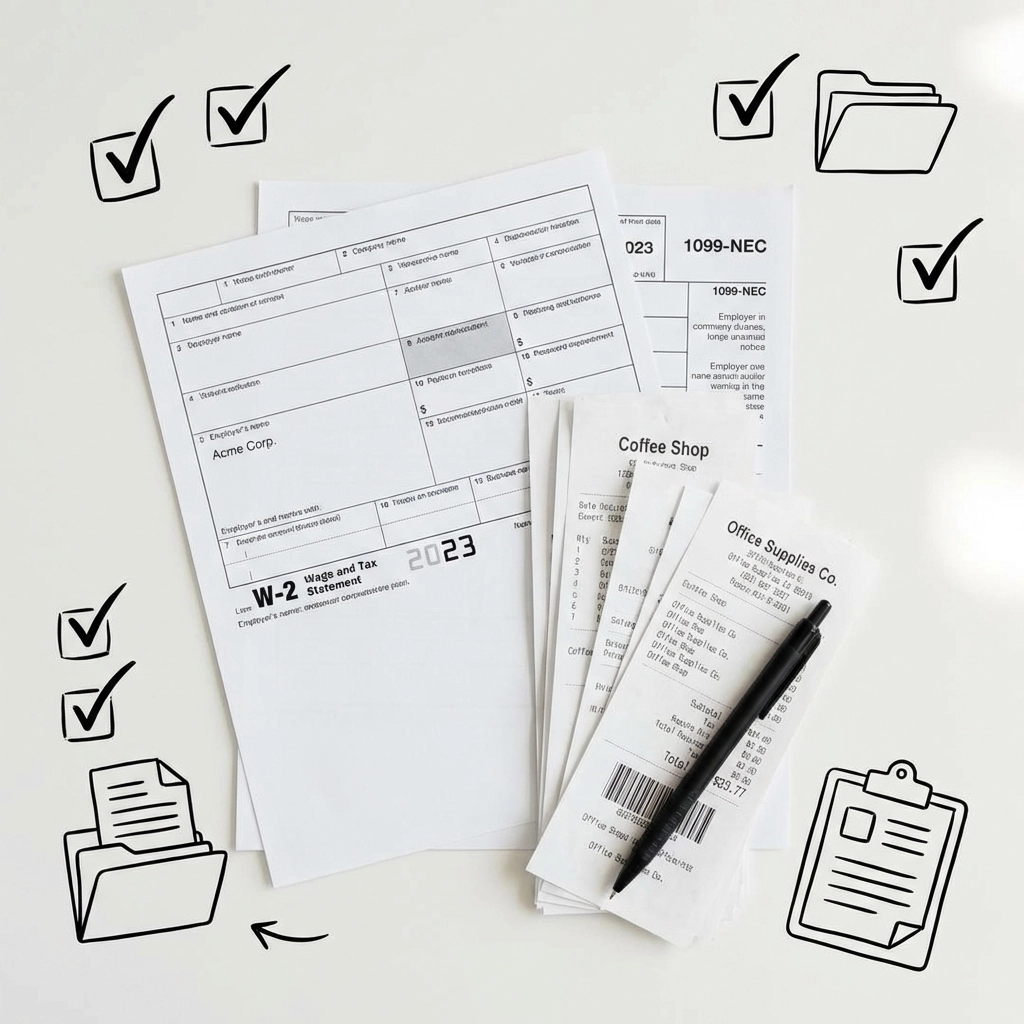
Now for the fun part, paperwork! Okay, maybe "fun" is a stretch, but staying organized makes the whole process so much easier. Here's a checklist of documents you'll likely need:
Income Documents:
- Form W-2 – Your employer sends this to you, showing your wages and the taxes withheld from your paycheck.
- Form 1099 – You'll receive these if you earned income from freelance work, contract jobs, investments, or other non-employment sources. There are several types (1099-NEC, 1099-INT, 1099-DIV, etc.), so keep an eye out for all of them.
Deduction Documents:
- Form 1098 – Reports mortgage interest paid (for homeowners).
- Form 1098-E – Reports student loan interest paid.
- Receipts – For charitable donations, medical expenses, childcare costs, and other deductible expenses.
Personal Information:
- Social Security numbers for yourself, your spouse, and any dependents.
- Dates of birth for everyone listed on your return.
- A government-issued photo ID.
Important: Don't file your return until you've received all your W-2s and 1099s. Employers and other payers have until the end of January to send these forms, so be patient!
Standard Deduction vs. Itemized Deductions: What's the Difference?
Alright, let's talk deductions, one of the most misunderstood parts of filing taxes.
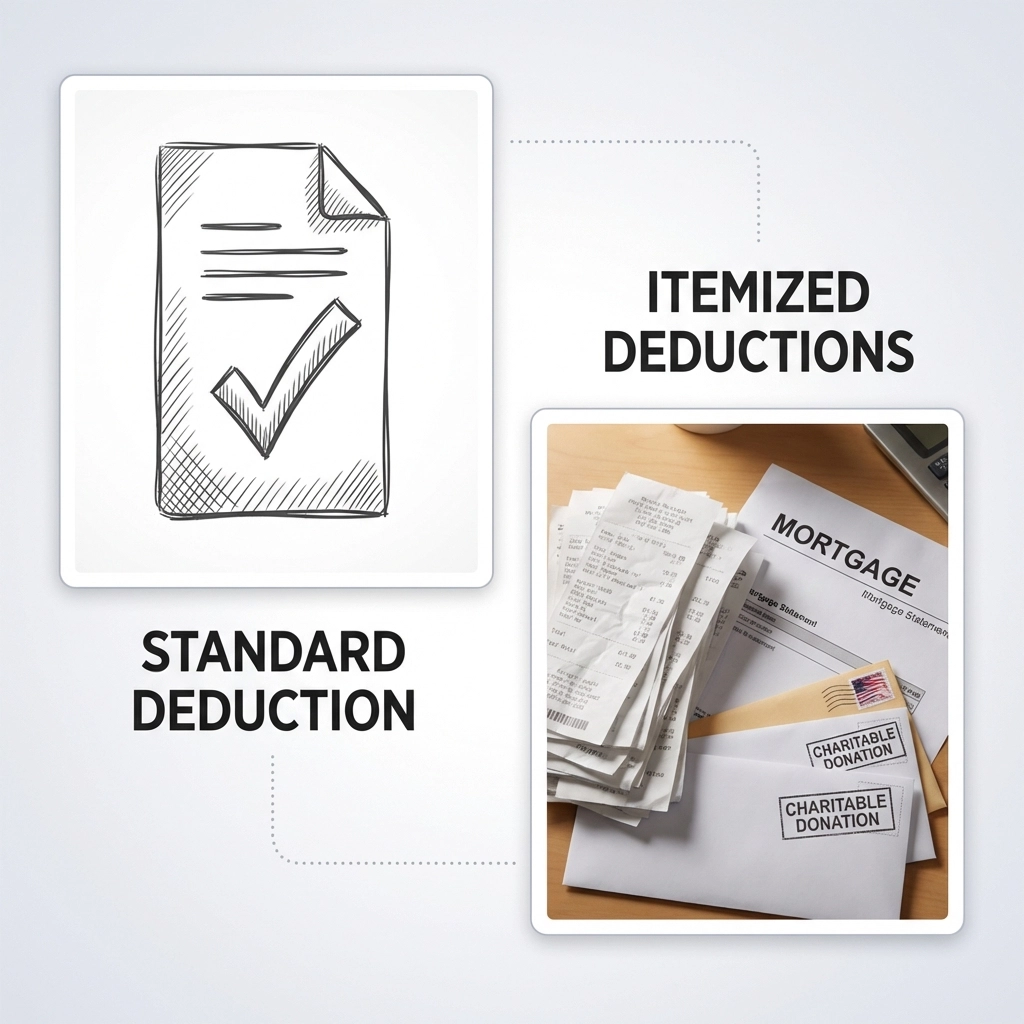
A deduction reduces your taxable income, which means you pay taxes on a smaller amount of money. Less taxable income = lower tax bill. Simple enough, right?
When you file, you have two options:
The Standard Deduction
This is a fixed dollar amount that reduces your taxable income. The IRS sets this amount each year, and it varies based on your filing status. For most people, the standard deduction is the easiest choice because you don't have to keep track of individual expenses, you just claim the set amount.
Itemized Deductions
Instead of taking the standard deduction, you can choose to itemize. This means you list out all your qualifying expenses, things like mortgage interest, state and local taxes, medical expenses, and charitable contributions, and deduct the total.
So which should you choose?
It comes down to math. If your itemized deductions add up to more than the standard deduction, itemizing will save you more money. If not, stick with the standard deduction.
For most taxpayers, especially those who don't own a home or have significant deductible expenses, the standard deduction is the way to go. But if you're unsure, that's exactly where a tax professional can help you make the right call!
Important Tax Deadlines You Can't Afford to Miss
Missing a tax deadline can mean penalties, interest, and a whole lot of stress. Here are the key dates to mark on your calendar:
If you can't file by April 15th, don't panic! You can request an extension, which gives you until October 15th to file. However, keep in mind that an extension to file is not an extension to pay. If you owe taxes, you'll still need to estimate and pay by April 15th to avoid penalties.
How to File Your Tax Return
You've gathered your documents, figured out your filing status, and decided on your deductions. Now it's time to actually file! You have a few options:
Electronic Filing (E-Filing)
This is the fastest, most secure way to file. You can use IRS-approved tax software to complete and submit your return electronically. E-filing also means faster refunds, typically within 21 days if you choose direct deposit.
Paper Filing
Yes, you can still go old school and mail in a paper return. Just be aware that processing takes much longer (we're talking weeks or even months), and there's a higher chance of errors or lost mail.
Hire a Tax Professional
If the thought of tackling your taxes alone makes you break out in a cold sweat, you're not alone! Working with a professional takes the guesswork out of the equation. A qualified tax preparer can help you maximize your deductions, avoid costly mistakes, and file with confidence.
You Don't Have to Do This Alone
Here's the truth: taxes can be complicated, and there's no shame in asking for help. In fact, working with a professional often saves you money in the long run by catching deductions you might have missed and ensuring everything is done correctly.
At Anchor Tax Service, we specialize in making tax time stress-free. Whether you're a first-time filer or you've been doing this for years, our friendly team is here to guide you every step of the way. We'll answer your questions, explain your options, and make sure you get every dollar you deserve.
Ready to get started? Give us a call at 423-243-8015 or stop by our office. We'd love to help you master your tax return this year: and every year after that.
Filing taxes doesn't have to be a headache. With a little preparation and the right support, you've got this! ⚓
 Print
Print 